Skip to content
Wargaming from the Balcony
Menu
  • Home
  • Reports and Reviews
  • YouTube
  • Links
Menu

Normandy Visit (Part Two)

Posted on October 10, 2018

Background

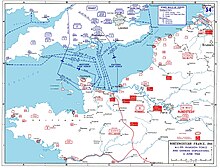
The Normandy landings were the landing operations on Tuesday, 6 June 1944 of the Allied invasion of Normandy in Operation Overlord during World War II. Code named Operation Neptune and often referred to as D-Day, it was the largest seaborne invasion in history. The operation began the liberation of German-occupied France (and later Europe) from Nazi control, and laid the foundations of the Allied victory on the Western Front.

The amphibious landings were preceded by extensive aerial and naval bombardment and an airborne assault—the landing of 24,000 American, British, and Canadian airborne troops shortly after midnight. Allied infantry and armored divisions began landing on the coast of France at 06:30. The target 50-mile (80 km) stretch of the Normandy coast was divided into five sectors: Utah, Omaha, Gold, Juno, and Sword. Strong winds blew the landing craft east of their intended positions, particularly at Utah and Omaha. The men landed under heavy fire from gun emplacements overlooking the beaches, and the shore was mined and covered with obstacles such as wooden stakes, metal tripods, and barbed wire, making the work of the beach-clearing teams difficult and dangerous. Casualties were heaviest at Omaha, with its high cliffs. At Gold, Juno, and Sword, several fortified towns were cleared in house-to-house fighting, and two major gun emplacements at Gold were disabled, using specialized tanks.

The Allies failed to achieve any of their goals on the first day. Carentan, St. Lô, and Bayeux remained in German hands, and Caen, a major objective, was not captured until 21 July. Only two of the beaches (Juno and Gold) were linked on the first day, and all five beachheads were not connected until 12 June; however, the operation gained a foothold which the Allies gradually expanded over the coming months. German casualties on D-Day have been estimated at 4,000 to 9,000 men. Allied casualties were at least 10,000, with 4,414 confirmed dead.

Museums, memorials, and war cemeteries in the area now host many visitors each year.

https://en.wikipedia.org/wiki/Normandy_landings

Photos

Part one of the series included photos of equipment located at the various Normandy museums.  In part two of the Normandy trip post, I am including photos taken on the actual beached that include a number of bunkers and overall views of the landing areas.  Enjoy!


– Manteuffel

Leave a ReplyCancel reply

Categories

  • Battle Report
  • Hobby
  • Museums and Battlefields
  • Opinions
  • Reviews
  • Tactics
  • Uncategorized

Tags

19th Century (11) Africa (38) Austrian (49) AWI (14) British (119) Dwarves (17) East Front (67) Epic (18) F&I (29) Fantasy (57) Fantasy Battle (172) Flames of War (267) FOW (283) French (88) German (175) Historical (596) Horse and Musket (194) Italian (43) Japanese (26) LotR (12) Magic (24) Mediterranean (17) Napoleonics (51) Naval (16) North America (22) Oathmark (14) Pacific (25) Prussian (40) Pulp (94) Rules (122) Russian (22) Saxony (11) Sci-Fi (104) Soviet (75) Star Wars (59) SYW (29) T9A (137) Terrain (186) USA (95) Warhammer (119) WAS (18) West Front (64) WWI (15) WWII (254) YouTube (130)

Recent Posts

  • 28mm First Relief of Lucknow, 1857.
  • 15mm Mexican American War, US Volunteers and Specialist Infantry.
  • Tyndall’s Point, Gloucester Point Battlefield Park.
  • Williamsburg Muster, 2026.
  • 15mm Mexican American War – US Regular Infantry.

Archives

  • March 2026
  • February 2026
  • January 2026
  • December 2025
  • November 2025
  • October 2025
  • September 2025
  • August 2025
  • July 2025
  • June 2025
  • May 2025
  • April 2025
  • March 2025
  • February 2025
  • January 2025
  • December 2024
  • November 2024
  • October 2024
  • September 2024
  • August 2024
  • July 2024
  • June 2024
  • May 2024
  • April 2024
  • March 2024
  • February 2024
  • January 2024
  • December 2023
  • November 2023
  • October 2023
  • September 2023
  • August 2023
  • July 2023
  • June 2023
  • May 2023
  • April 2023
  • March 2023
  • February 2023
  • January 2023
  • December 2022
  • November 2022
  • August 2022
  • July 2022
  • June 2022
  • May 2022
  • April 2022
  • March 2022
  • February 2022
  • January 2022
  • December 2021
  • November 2021
  • October 2021
  • September 2021
  • August 2021
  • July 2021
  • May 2021
  • April 2021
  • March 2021
  • February 2021
  • January 2021
  • December 2020
  • November 2020
  • October 2020
  • September 2020
  • August 2020
  • July 2020
  • June 2020
  • May 2020
  • April 2020
  • March 2020
  • February 2020
  • January 2020
  • December 2019
  • November 2019
  • October 2019
  • September 2019
  • August 2019
  • July 2019
  • June 2019
  • May 2019
  • April 2019
  • March 2019
  • February 2019
  • January 2019
  • December 2018
  • November 2018
  • October 2018
  • September 2018
  • August 2018
  • July 2018
  • June 2018
  • April 2018
  • March 2018
  • February 2018
  • January 2018
  • December 2017
  • November 2017
  • October 2017
  • September 2017
  • August 2017
  • July 2017
  • June 2017
  • May 2017
  • April 2017
  • March 2017
  • February 2017
  • January 2017
  • December 2016
  • November 2016
  • October 2016
  • September 2016
  • August 2016
  • July 2016
  • June 2016
  • May 2016

Recent Comments

  • redcaer1690 on 15mm Mexican American War – US Artillery.
  • redcaer1690 on 15mm Mexican American War, US Volunteers and Specialist Infantry.
  • lorenzoseventh on 15mm Mexican American War – US Regular Infantry.
  • Andrew John Fuller on 15mm Mexica American War – US Cavalry and Commanders.
  • Manteuffel on Lion Rampant – Battle of Manzikert, August 1071.
©2026 Wargaming from the Balcony | Design: Newspaperly WordPress Theme